
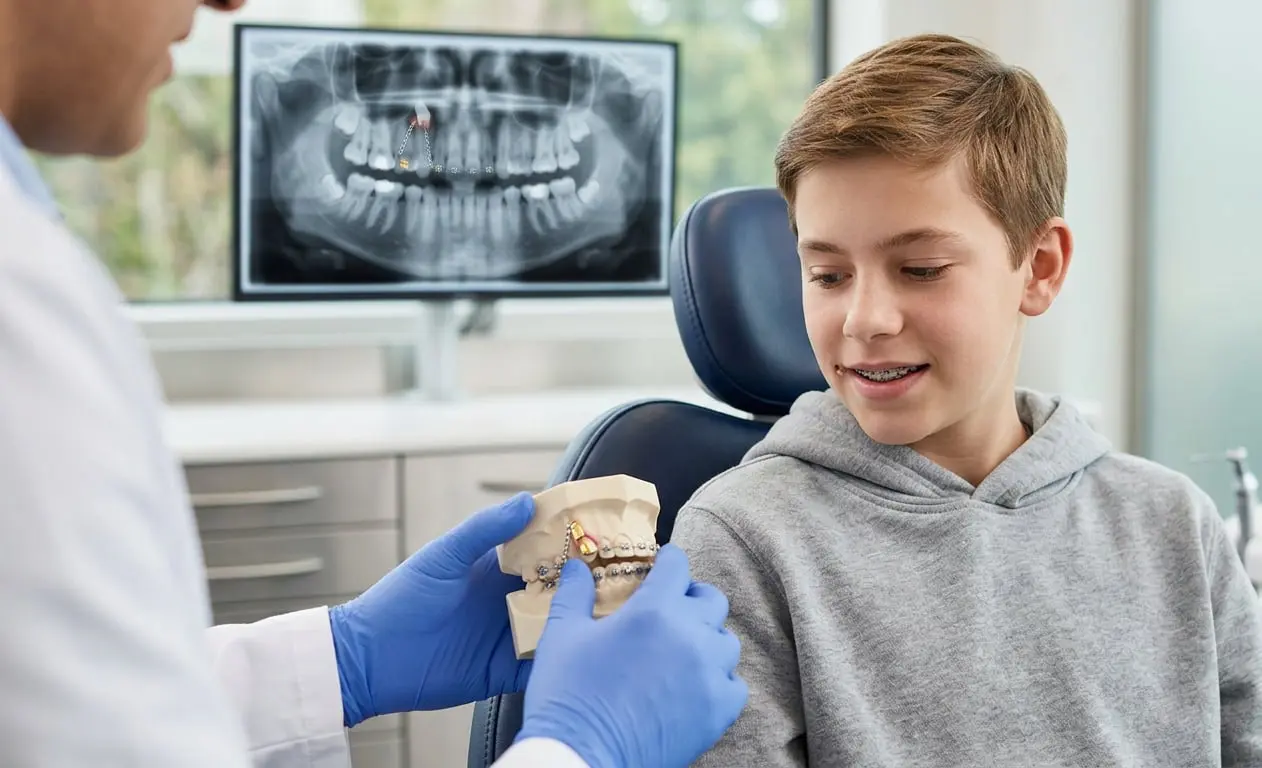
What Is an Impacted Canine?
An impacted canine is a permanent canine tooth that has failed to erupt into its correct position in the dental arch. It remains trapped within the jawbone, either on the palatal (roof-of-mouth) side or the labial (lip) side. Upper canines are the most frequently impacted teeth after wisdom teeth, affecting roughly 2% of the population, and palatal impaction is about twice as common as labial impaction. The lower canines can impact as well, but do so far less often.
Canines have the longest and most tortuous eruption path of any tooth — they form high in the maxilla near the floor of the eye socket and travel a long, winding route before dropping into place between the lateral incisor and the first premolar. That long path gives the canine more opportunity to deviate, become blocked by the root of a neighboring tooth, or lose its way. Bold Bite sees impacted canines at every stage — in children whose eruption pattern is still unfolding, in teens whose baby canine never fell out, and in adults who had the problem their whole life and finally decided to address it.
Why Canine Teeth Are Worth Saving
Unlike wisdom teeth, which are routinely extracted, canines serve essential functions that cannot be easily replaced. Bold Bite’s default starting position is therefore to guide the impacted canine into the arch rather than remove it.
This is why the default goal at Bold Bite is to guide the impacted canine into position rather than extract it. Guided eruption is not always the best path, though — the right call depends on where the canine sits in the bone, the patient’s age, and the complexity of the case. The next section explains when premolar substitution is the better choice.
The Bold Bite Approach to Impacted Canines
Impacted canines illustrate how Bold Bite Orthodontics coordinates care rather than trying to do every part of a complex case in-house. The orthodontic side — space creation, bracket placement, gold-chain traction, and guided eruption — is handled by Dr. Marty and Dr. Cao at the Jacksonville office. The surgical exposure itself is handled by Dr. Doug Storch at Modern Perio, a long-standing partner practice, with Jacksonville-area oral surgery available as a backup for the cases that need it.
Bold Bite’s preferred surgical technique depends on where the canine sits. Palatally impacted canines are typically managed with an open exposure, which leaves the gum tissue open so the tooth can be pulled straight down into the palate. Facially impacted canines are managed with a closed exposure and a gold chain or IsoGlide attachment, which keeps the gum line tidy and protects the final aesthetic result on the buccal surface. Either way, exposure cases typically add six to eight months to the total treatment timeline, and the practice sets that expectation up front rather than discovering it mid-case.
Dr. Cao’s CAGS training — a two-year certificate of advanced graduate study in orthodontics beyond the standard MS — makes her the lead orthodontist on Bold Bite’s more complex impacted-canine and surgical-orthodontic cases. Dr. Marty’s background in general dentistry before specializing means the restorative and periodontal implications of each option are weighed at the same table. Complex cases are case-conferenced between both doctors before a recommendation is made.
Expose-and-Bond vs. Premolar Substitution
When Premolar Substitution Makes Sense
Extracting the impacted canine and moving the first premolar forward into the canine position can shorten treatment significantly and produce an excellent result — but the decision has to be weighed carefully because it trades a long-rooted canine for a shorter-rooted premolar. Bold Bite considers premolar substitution when:
When Expose-and-Bond Is Preferred
An Honest Conversation at Consultation
Early Detection: The Age 9–10 Window
The single most important factor in impacted-canine outcomes is early detection. At age 9 or 10, the permanent canine is developing high in the maxilla but has not yet fully committed to an eruption path. A panoramic x-ray at this age can identify canines that are angled toward the root of the lateral incisor or tipped toward the palate — the classic ectopic pattern — before they become truly impacted. Bold Bite builds this check into its Phase 1 evaluation as part of the standard AAO age-7 screening window.
Interceptive Approach: Primary Canine Extraction
Published research shows that extracting the baby canine at age 10 or 11 — at the moment the permanent canine is developing on an ectopic path — removes the obstruction and allows the permanent canine to self-correct its eruption in 62 to 78% of palatally impacted cases. This simple extraction, combined with palatal expansion when the arch is narrow, often eliminates the need for surgical exposure entirely. It is the clearest payoff for early orthodontic screening: a ten-minute baby-tooth extraction in the fourth grade can save a surgical procedure and a year of orthodontic traction in the eighth grade.
What Bold Bite Checks at Consultation
Palatal palpation. At every child consultation, the doctors palpate the palate and labial vestibule to feel for the canine bulge — a small, firm bump that indicates the canine is on track in the bone. If the bulge is absent on one side past age 10, further imaging is warranted even when everything else looks normal.
CBCT 3D localization. When an impacted canine is suspected, the Bold Bite Vatech Green cone-beam CT shows the exact position of the tooth in three dimensions — its angulation, depth, proximity to adjacent roots, and whether it is palatal or labial. Published studies show that CBCT-guided treatment planning reduces overall treatment time by roughly four months compared to conventional 2D imaging and increases clinician confidence in the surgical approach. Bold Bite includes the CBCT as part of the comprehensive exam for suspected impaction cases.
What Happens If an Impacted Canine Is Not Treated
Root Resorption of Adjacent Teeth
The most serious consequence. An impacted canine pressing against the root of the lateral incisor can resorb (dissolve) that root from within the bone — silently, with no symptoms. By the time it is detected clinically, the lateral incisor may be unsalvageable. This is the quiet damage that 2D panoramic films routinely miss; CBCT imaging picks it up when it is still reversible. Bold Bite flags suspected resorption at the diagnostic stage and, when present, accelerates the treatment plan to protect the neighboring tooth.
Cyst Formation
A dentigerous cyst can develop around the crown of an impacted tooth. While usually benign, cysts expand over time and can damage surrounding bone and teeth. Early diagnosis keeps the cyst small and manageable.
Loss of the Baby Canine
The retained baby canine will eventually lose its root to resorption and fall out — typically in the late teens or twenties — leaving a gap with no permanent tooth waiting underneath. A permanent gap at the corner of the smile is always visible and is substantially more difficult to close later than it is to resolve during active growth.
Arch Integrity
Without the canine, adjacent teeth drift into the empty space, creating spacing and bite problems that become progressively more difficult to correct. The molars rotate forward, the lateral incisor tips sideways, and the occlusion loses the canine-guided protection it depends on for long-term stability.
The Impacted Canine Treatment Process at Bold Bite
CBCT Localization
3D imaging determines the exact position, angulation, depth, and relationship to adjacent roots. This guides the surgical approach and the direction of orthodontic traction.
Create Space
Braces are placed and the teeth are aligned to create a gap in the arch where the canine belongs. If the arch is narrow, palatal expansion may be needed first. The baby canine is extracted if still present.
Surgical Exposure
Braces are placed and the teeth are aligned to create a gap in the arch where the canine belongs. If the arch is narrow, palatal expansion may be needed first. The baby canine is extracted if still present.
Orthodontic Traction
Dr. Marty uses the chain to apply light, slow traction, gradually guiding the canine through the bone and into its correct position over 6–12 months. Force must be light to avoid ankylosis (tooth fusing to bone) or root resorption.
Final Alignment
Once the canine has erupted into the arch, comprehensive braces fine-tune its position, establish proper canine guidance, and align the rest of the teeth. Total treatment: 18–30 months.
Why Bold Bite Handles Impacted Canines Carefully
Impacted canines are one of the most case-dependent problems in orthodontics. The right answer in a fourth-grader with a palatal ectopic is almost never the right answer in an adult with a labially displaced, nearly ankylosed canine. Bold Bite handles these cases carefully because of three practice-level choices that shape every impacted-canine treatment plan.
Two specialist perspectives on every complex case
Dr. Marty and Dr. Cao are a husband-and-wife orthodontist team in one office. Every impacted-canine case is case-conferenced between them before a recommendation goes to the family — one specialist’s read on angulation, root proximity, and traction risk is double-checked against the other’s. Dr. Cao’s CAGS training at Jacksonville University makes her the lead on the practice’s most complex surgical-orthodontic cases, including impacted-canine cases with adjacent-tooth resorption risk.
A long-standing surgical partnership, not a referral lottery
Surgical exposure is only as good as the surgeon performing it. Bold Bite refers its exposure cases to Dr. Doug Storch at Modern Perio as the primary surgical partner, with Jacksonville-area oral surgery as a backup. Using the same surgeon across most cases means the orthodontic-to-surgical handoff is predictable: the bracket placement, chain direction, and exposure technique are coordinated up front, and the Bold Bite orthodontic team can start traction at a known time after surgery rather than waiting weeks for communication.
A full-mouth view of the decision
Dr. Marty practiced general dentistry for eight-plus years before specializing in orthodontics. That background drives how Bold Bite weighs the save-versus-substitute decision: the restorative implications of a premolar-in-canine position, the long-term periodontal health of the adjacent lateral incisor, the color match of the reshaped premolar, and the occlusal consequences of losing canine guidance are all part of the conversation at consultation. The recommendation is not a narrow orthodontic opinion; it is a whole-mouth one.
Treatment Timeline
| Stage | Duration | What Happens |
|---|---|---|
| Screening & Imaging | 1–2 visits | Panorex, CBCT 3D localization |
| Interceptive (ages 10–11) |
6–12 months
|
Baby canine extraction, monitor eruption
|
| Space Creation |
4–8 months
|
Braces, expansion if indicated
|
| Surgical Exposure |
1 day procedure
|
Oral surgeon exposes and bonds bracket
|
| Traction + Alignment |
12–18 months
|
Light traction to guide canine into arch
|
| Detailing & Retention |
3–6 months
|
Establish canine guidance, retainers
|
What to Expect at Your Consultation


Before & After
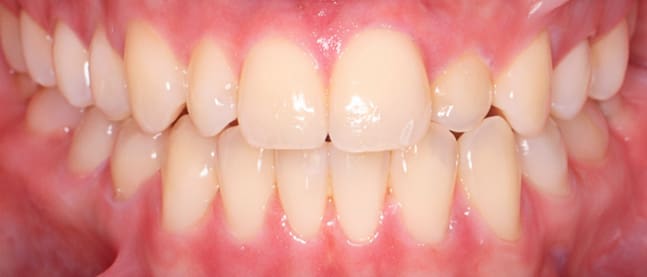
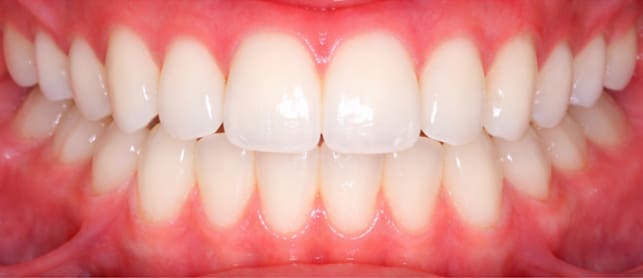
Crowding: Invisalign/Clear Aligners
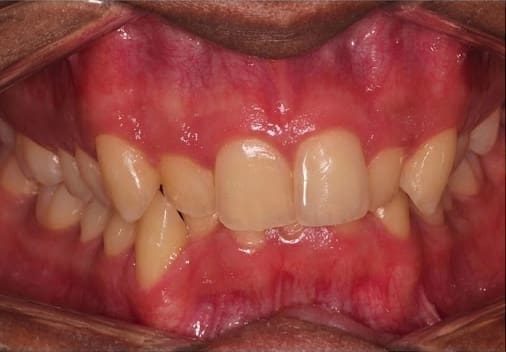
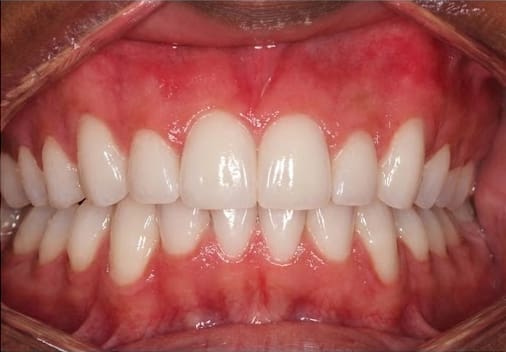
Deep Overbite: Braces with Bite-Pads
See more impacted canine cases in our treated cases gallery.
How Much Does Impacted Canine Treatment Cost?
The practice coordinates directly with the surgeon for scheduling and insurance pre-authorization. Most dental insurance covers both the orthodontic treatment and the surgical exposure when medical necessity is documented (impacted tooth, risk of root resorption).
Insurance & Financing
Common Appliances Used at Bold Bite
Guiding an impacted canine into position requires fixed braces to hold space open and direct the tooth’s path of eruption over 12 to 18 months; when the anchorage demands of the case are high, temporary anchorage devices give Dr. Marty or Dr. Cao precise control without relying on patient cooperation.
