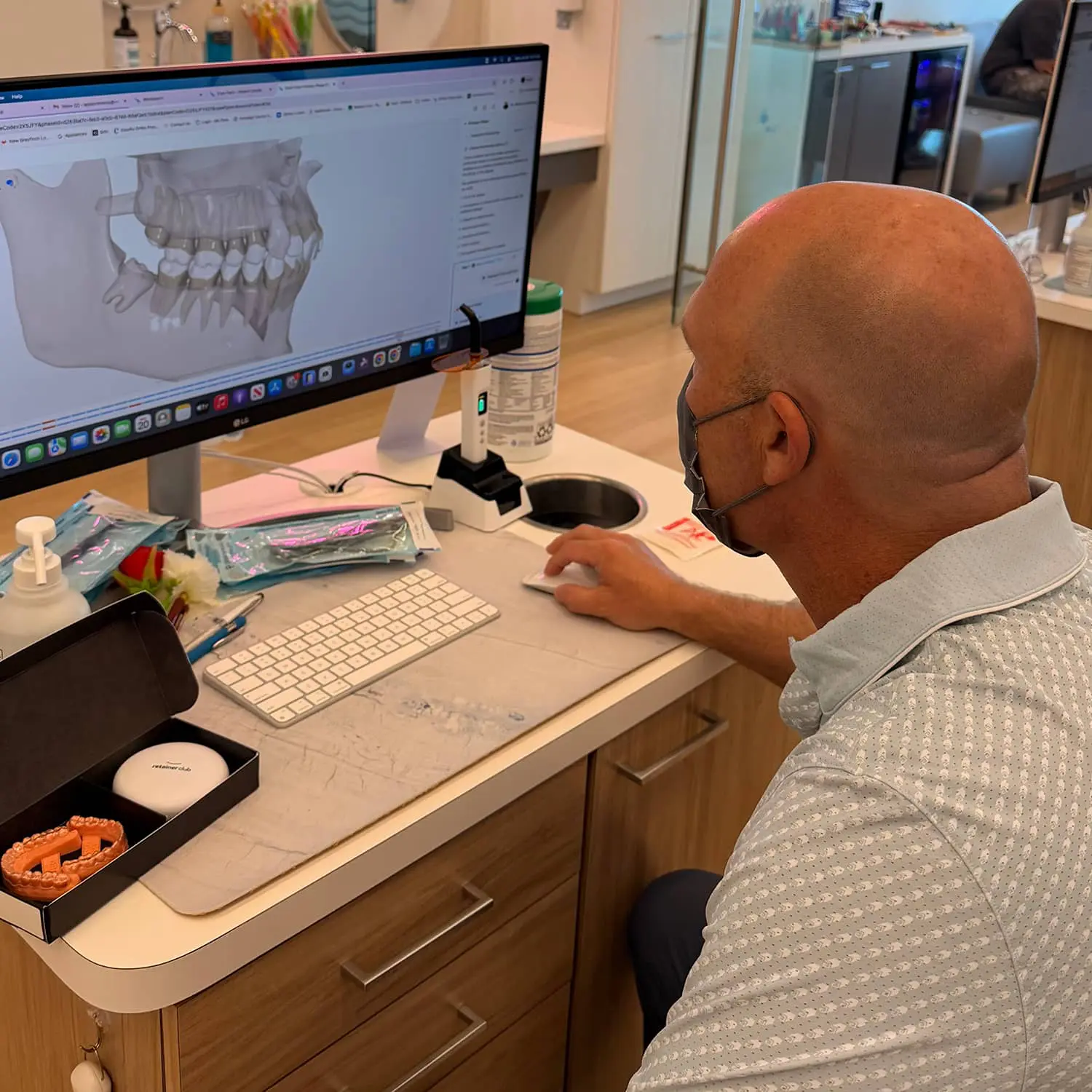
Dr. Trang Cao and Dr. Marty Greenberg trained on these diagnostic workflows at Boston University School of Dental Medicine and Jacksonville University, and they run the practice the way they would want an office to run for their own children. That standard starts with what the scans show before treatment begins, and it continues through 3D-printed custom bands, Grin Scope check-ins between visits, and the indirect-bonding tray that makes a braces appointment shorter.
The rest of this page explains what each piece of equipment does, why it was chosen, and what it changes for the patient in the chair.
3D Imaging & AI-Assisted Airway Screening
Vatech Green CT
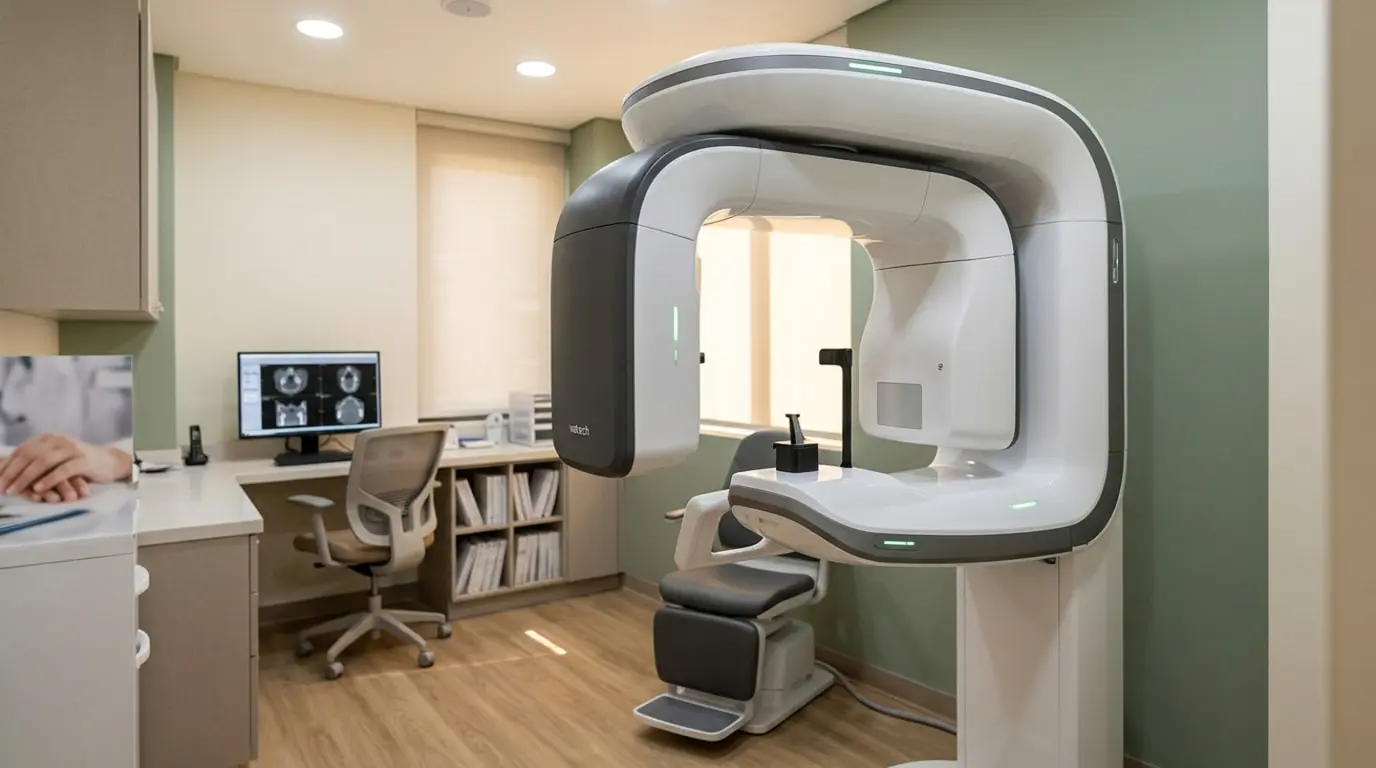
The ultra-low-dose protocol on the Green CT delivers a fraction of the radiation exposure of conventional CBCT systems, which is important for growing children who may need repeat imaging during Phase 1 or during multi-year comprehensive treatment.
Every Vatech CBCT at Bold Bite runs through AI-assisted airway analysis on the way into the record. The software segments the pharyngeal airway, reports narrowest cross-sectional area and total airway volume, and flags constriction for the doctor to review. Dr. Cao and Dr. Marty examine every AI-flagged scan together, correlate it with the clinical exam and sleep history, and explain findings in plain language during the consultation. When the scan and history suggest sleep-disordered breathing, Bold Bite coordinates a referral to a sleep medicine physician or ENT for formal diagnosis — the orthodontic office is the screener, not the diagnostician.
The AI airway workflow is not reserved for kids with obvious symptoms. Bold Bite screens every patient at every consultation, because many families do not know that snoring, mouth breathing, or restless sleep in a child can be driven by jaw or airway anatomy that orthodontic treatment can address.
Digital Intraoral Scanning
iTero and Allied Star
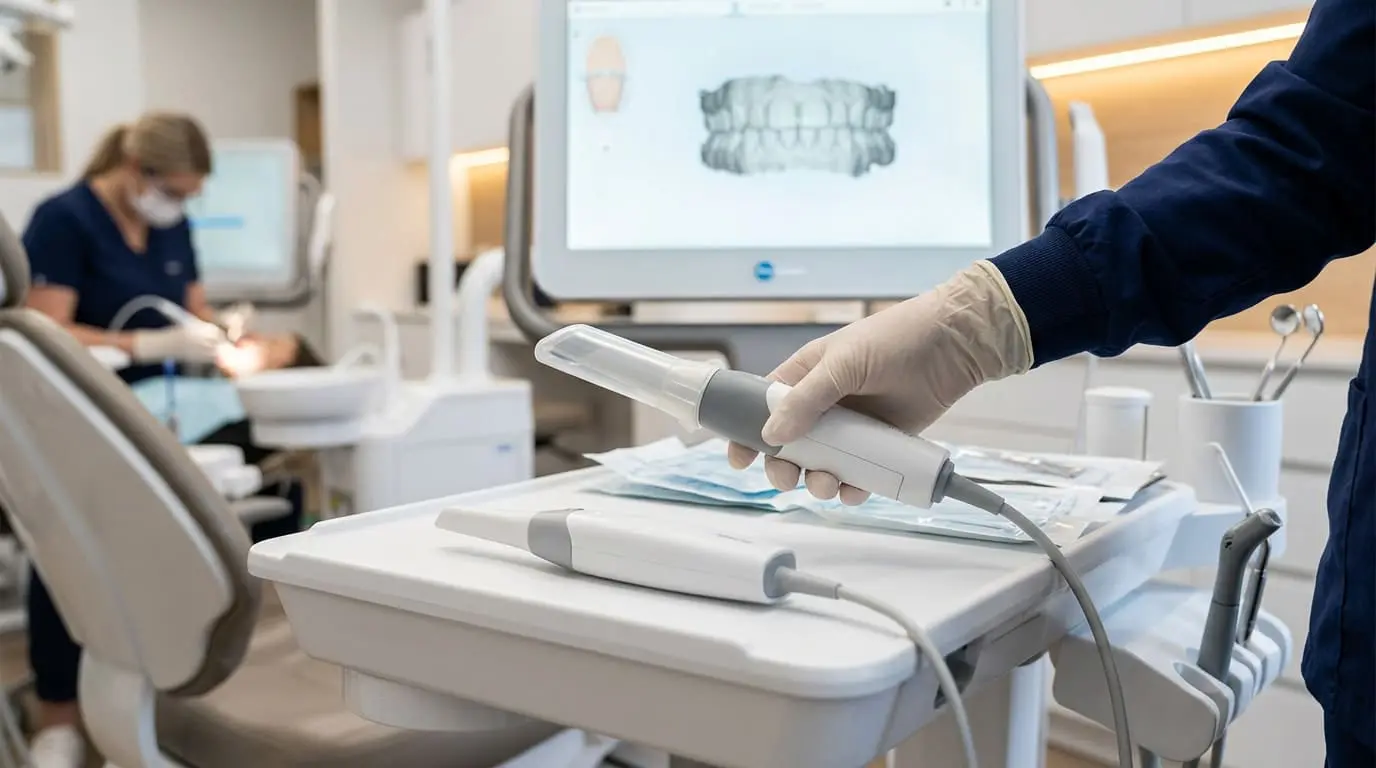
A digital scan produces a file, not a physical model that has to be shipped to a lab. That changes the orthodontic workflow in three concrete ways. First, aligner treatment plans can be submitted to Invisalign or Angel Aligners the same day the scan is taken. Second, the scan transmits directly to the in-house 3D printer for retainers, custom bands, and indirect-bonding trays — eliminating the one-to-two-week round trip through an outside lab. Third, the 3D model is archived and reusable; if a retainer is lost a year later, a replacement can be printed from the original scan in most cases without asking the patient to come back in for another impression.
For patients who have had old-style goopy impressions before — which is most adult patients — the shift to a 40-second digital scan is one of the most noticeable day-one quality-of-life improvements Bold Bite offers.
In-House 3D Printing
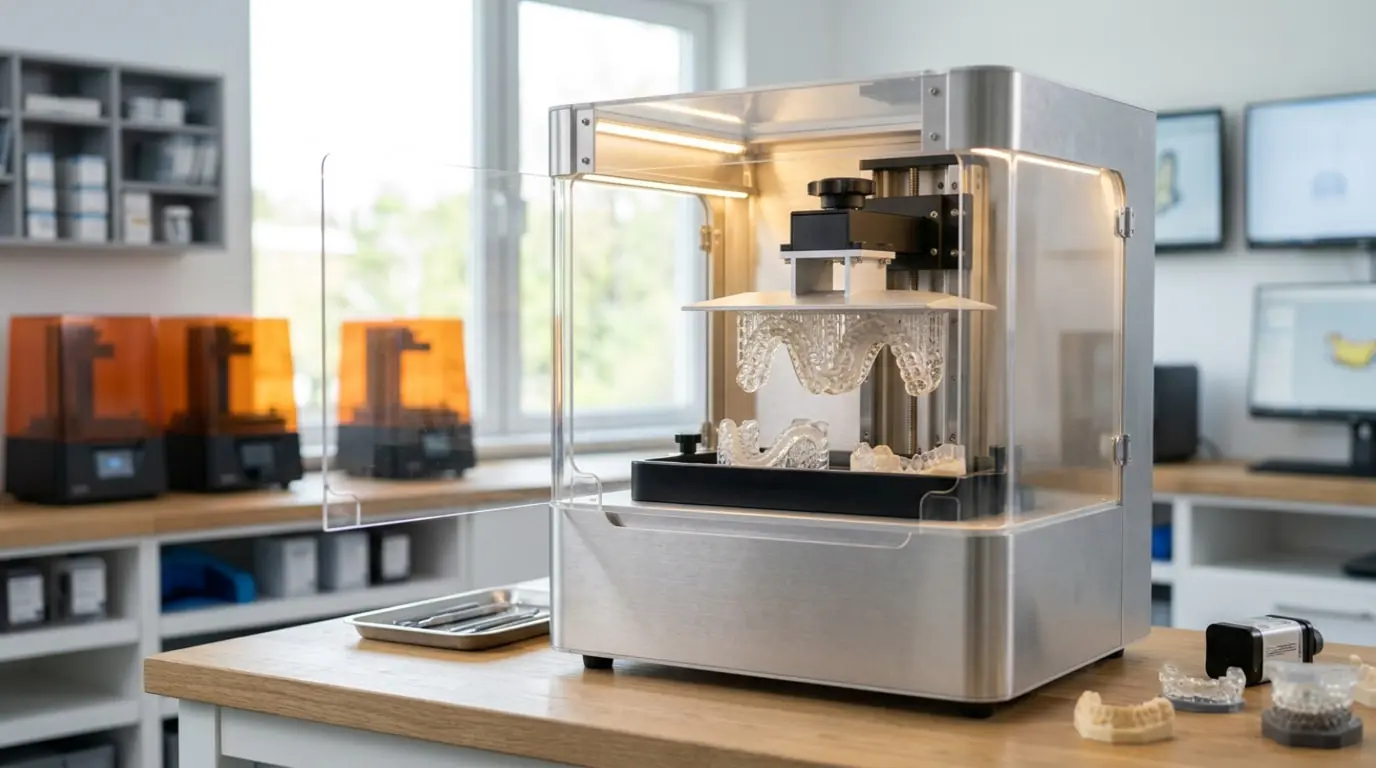
The practical effect shows up in three places patients notice.
Custom 3D-printed molar bands eliminate the spacer appointment
Same-day retainer delivery on debonding day
On the day braces come off, the iTero scan of the finished teeth goes straight to the in-house printer while the patient has their final records taken. A working model of both arches is printed in about an hour. The Essix retainer is thermoformed over that model, trimmed, polished, and handed to the patient before they leave. Patients walk out wearing the retainer that protects the result Dr. Cao and Dr. Marty just spent 12 to 36 months building. Outside-lab retainers typically take one to two weeks — during which teeth are already allowed to drift.
Indirect-bonding trays and appliance working models
Complex appliance cases — MARA, Herbst, MARPE, custom habit breakers — require precise working models. Bold Bite prints those on-site from the CBCT and iTero data, then sends the digital specifications to specialty labs for final fabrication. What normally takes three weeks of lab back-and-forth compresses into a week or less.
Patient fidget toys are printed from the same machines. It is not a clinical feature, but it is a tell: the printers are running every day.
Digital Treatment Planning
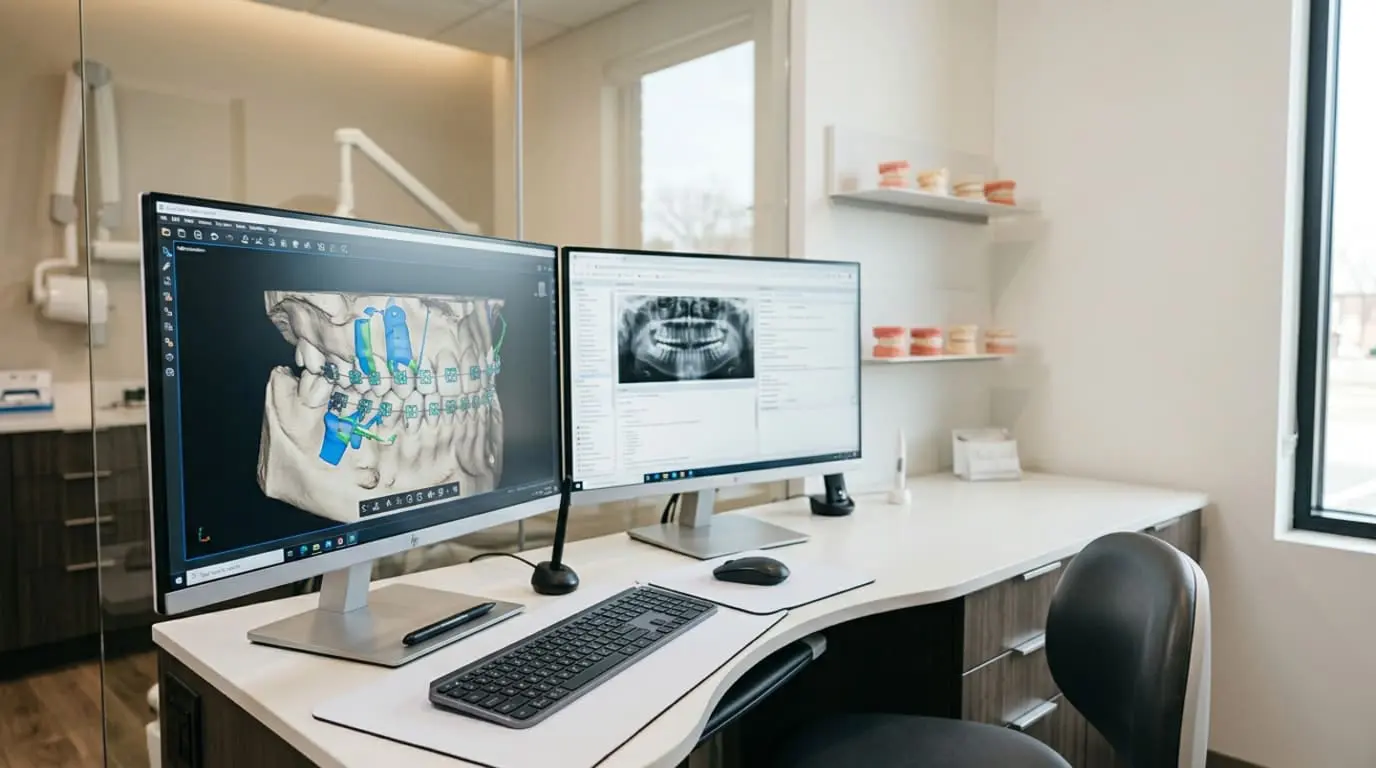
Planning from 3D data changes what the doctor can commit to. Root-position angles, bone-thickness limits for molar intrusion, impacted-canine traction paths, and airway-clearance targets are all visible before the plan is finalized. That reduces mid-treatment surprises, which is how a predicted 18-month treatment ends up taking 18 months rather than 26. Dr. Cao’s CAGS-level diagnostic training and Dr. Marty’s general-dentistry background both feed into this phase — a plan that looks good for tooth alignment but ignores restorative, periodontal, or airway consequences is not a plan Bold Bite signs off on.
Patients see the output of digital planning in two places: the consultation, where the doctors walk the family through a 3D model of the predicted final result on the screen; and the financial agreement, where the stated treatment length and fee are tied to that plan instead of guessed at.
Remote Monitoring
Grin Scope (smartphone app)
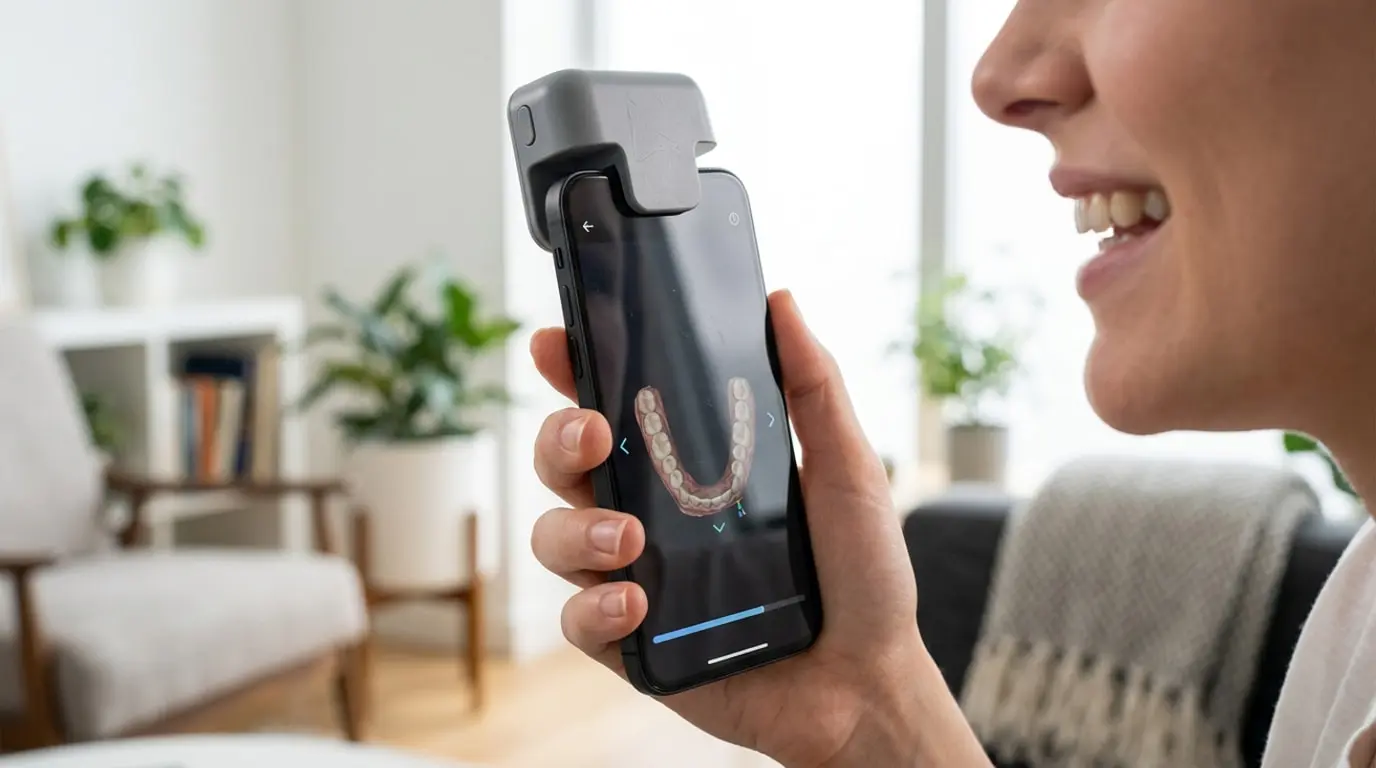
The effect on a treatment timeline is substantial. Routine in-office check-in appointments — the short “looks good, see you next month” visit that parents drive twenty minutes each way for — can be replaced with a Grin Scope scan submitted the night before bed. In-office visits are preserved for the appointments that actually need hands-on chair time: wire changes, bracket repairs, appliance activations, and finishing checks. Most Bold Bite families report fewer total trips to the office over the course of a comprehensive plan.
Grin also shortens the response time on problems. A parent who sees a broken bracket on a Sunday night can submit a scan, get it reviewed by Monday morning, and come in for a repair visit that is pre-diagnosed rather than walk-in triaged. Broken-bracket turnaround is one of the hidden drivers of total treatment length — every missed week extends finishing — and remote monitoring pulls that loop tighter.
Indirect Bonding
Indirect bonding is a digital braces-placement workflow. Instead of bonding each bracket directly onto the tooth freehand during the bonding appointment, Dr. Cao and Dr. Marty plan the ideal bracket position for every tooth on the 3D iTero scan first, then 3D-print a custom transfer tray that seats all the brackets at once in the patient’s mouth. Every bracket lands in the exact planned position in one short appointment, and the precision of the bracket placement directly determines how efficiently the wires can move the teeth.
For the patient, indirect bonding means a shorter bonding appointment, less time holding the mouth open, and fewer mid-treatment repositioning visits down the line. For the treatment plan, it means the wire does not have to fight brackets that were placed slightly off — which is the single biggest cause of treatment taking longer than predicted. Bold Bite uses indirect bonding as the default workflow for comprehensive braces cases when the scan and tooth surface quality make it the right choice.
An in-person examination with a dentist licensed under chapter 466, Florida Statutes, is recommended before beginning telehealth treatment in order to prevent injury or harm.
What This Means for Patients
Additional Clinical Technology
Equipment Summary
| Category | Equipment | What It Does |
|---|---|---|
| 3D Imaging (CBCT) | Vatech Green CT | Ultra-low-radiation-dose 3D cone-beam imaging with full airway, sinus, head/neck, and dual-jaw capture. AI-assisted airway analysis flags constriction at every new-patient consult — not just for airway-flagged cases. Free at consult for patients under 18. |
| Intraoral Scanner | iTero and Allied Star | Two digital scanning systems replace impression trays. A full-mouth iTero scan takes about 40 seconds, produces 3D models for treatment planning, and transmits directly to Invisalign, Angel Aligners, and the in-house 3D printer for retainers and appliances. Allied Star is a wireless scanner used as a secondary workflow for chairside rescans and records follow-up. |
| 3D Printing | In-house 3D printing lab | Retainers, custom bands, indirect-bonding trays, MAD appliance working models, and patient fidget toys are printed in-office. Same-day retainer delivery is possible for emergencies. |
| Remote Monitoring | Grin Scope (smartphone app) | Smartphone-app-based remote orthodontic monitoring. Patients attach a small scope to a phone camera, take a 2-minute guided scan of their teeth at home, and submit. Dr. Marty and Dr. Cao review every submission and respond the same or next business day. Bold Bite is the only practice in Jacksonville that enrolls every patient in remote monitoring as a standard part of treatment. |
